
Recently I was working with a builder on a spec house and he asked me about the cost for the backsplash that I’d included with my granite quote.
This isn’t a strange occurrence, many times builders are trying to save every dollar they can, but it did get me thinking- what IS the most cost effective option for backsplash?
This answer largely depends on what the situation is, who’ve you’ve already got contracted on the job site, and your personal aesthetic.
In this particular situation, this was a new construction spec house, meaning this was a brand new house that wasn’t being built for a particular person but on speculation that the market is good enough and the builder will be able to sell it. So the builder here is going to be using basic materials- if they are using a tile they would specify a modest, white ceramic subway tile.
So, let’s look at the options for a backsplash:
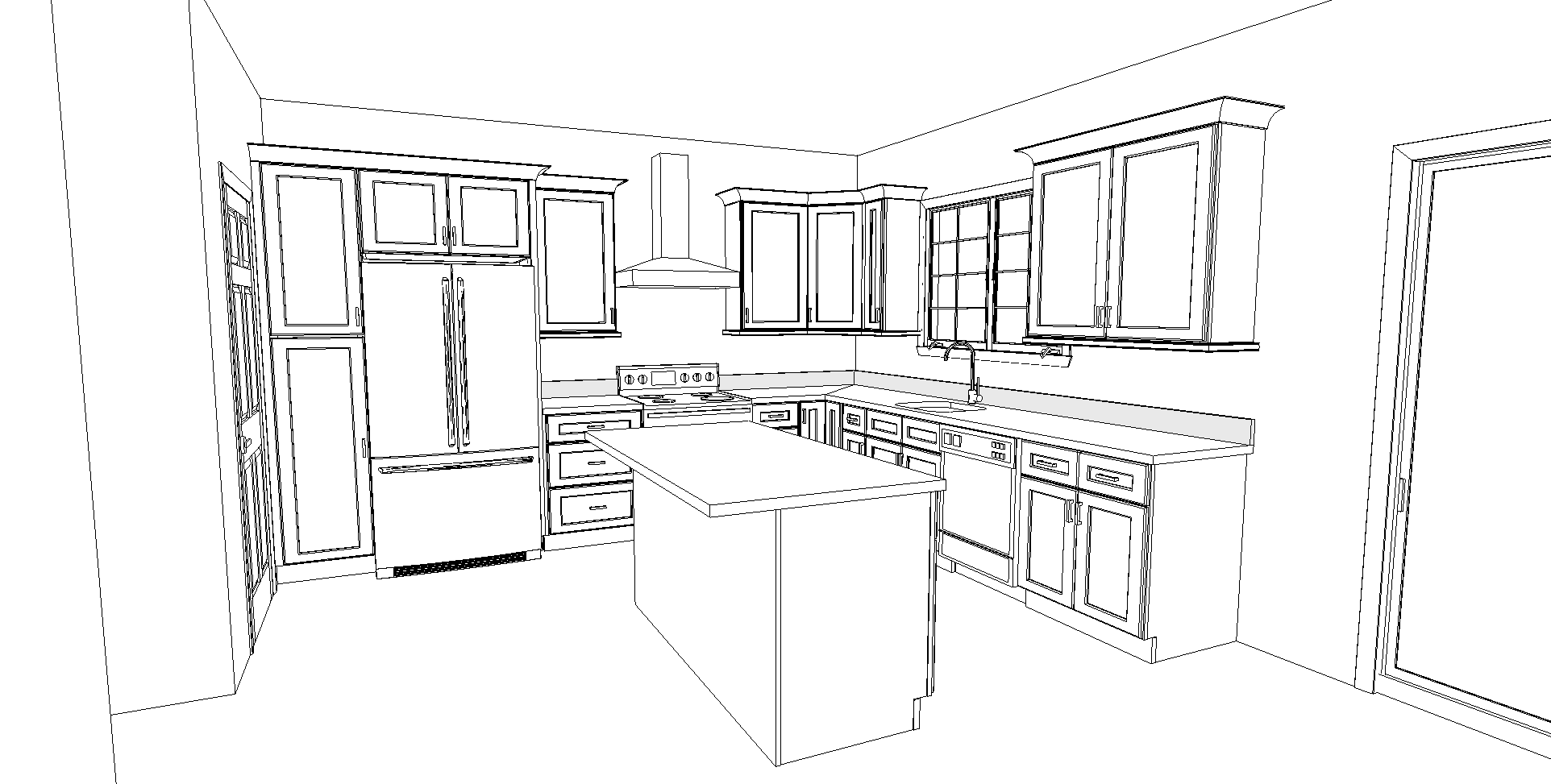
- Matching Countertop Material: The first option below is what I usually propose to clients as the easiest, but also the most common. This would entail taking a piece of matching countertop material, whether stone or solid surface or laminate material and running it up the back wall, usually at a height of 4″. Occasionally you may also see this run all the way up the wall for the full height of the backsplash
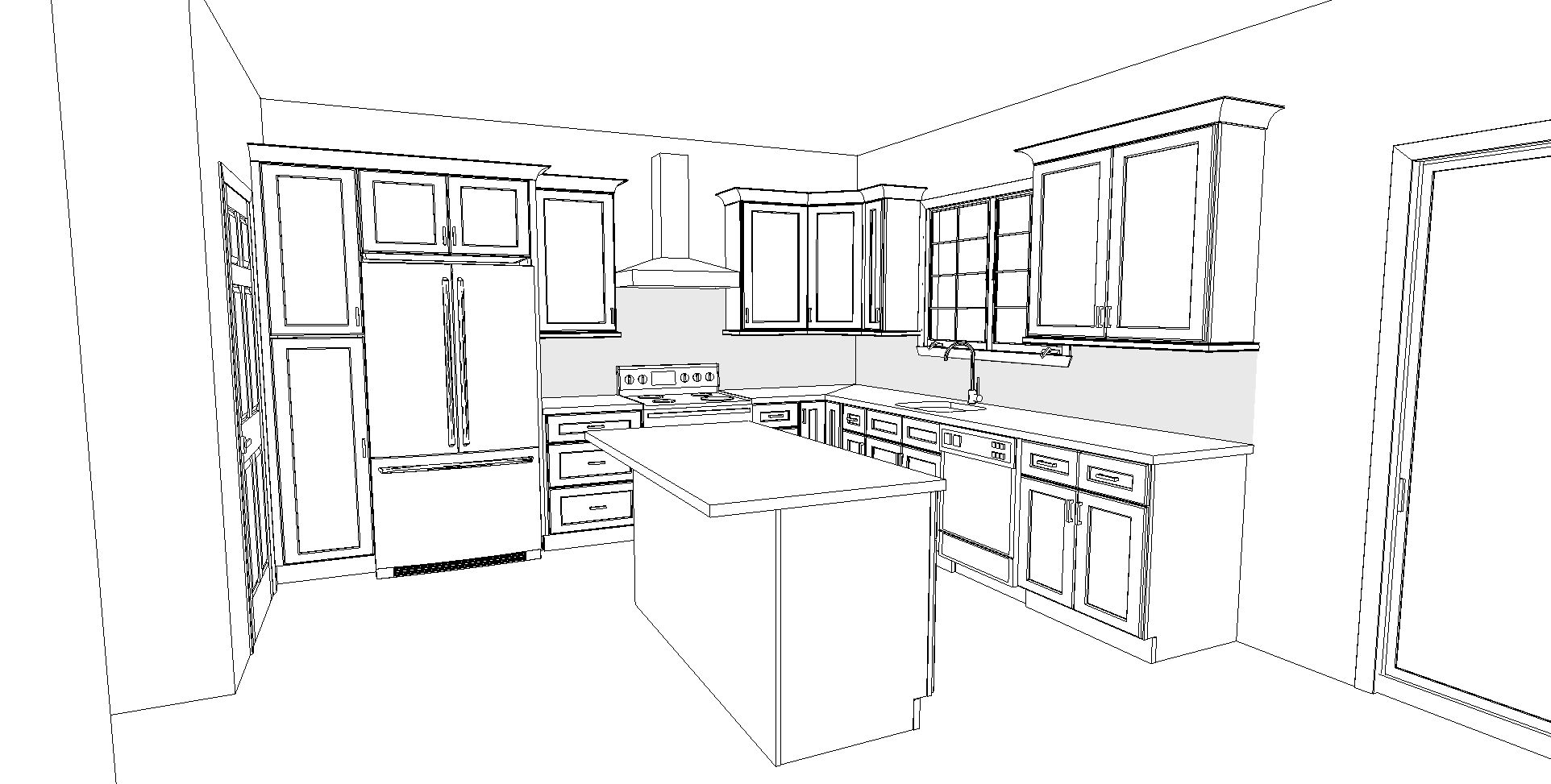
- Ceramic/Stone/ Glass Tile Backsplash: This is becoming a more popular option than the matching countertop material. This would entail a countertop being installed, then tile applied on the rear wall down to the countertop. There are a variety of options with this as well- most commonly I see this applied at the full height of the backsplash, from the countertop to the underside of the wall cabinets. A less common variation on this is to simply apply just a few rows of tile up from the countertop, something I rarely see in my area. There’s more flexibility in selecting a variety of materials including ceramic, stone, glass, or even metallic pieces. Keep in mind that some of these materials get quite expensive, especially glass tile, so the costs detailed below could be skewed
- Full Sheet Glass/Textured Solid Surface/ Other Exotic Materials: Similar to the first option, I’ve occasionally seen backsplash surfaces that might be a solid surface material that’s carved or routed to mimic tile, or a full height glass panel backsplash. There are an endless number of design options for dressing a backsplash. For our purpose in this post we won’t be focusing on these materials as they’ll typically be in an upper level price point and will not be cost effective
Let’s take a look at the numbers
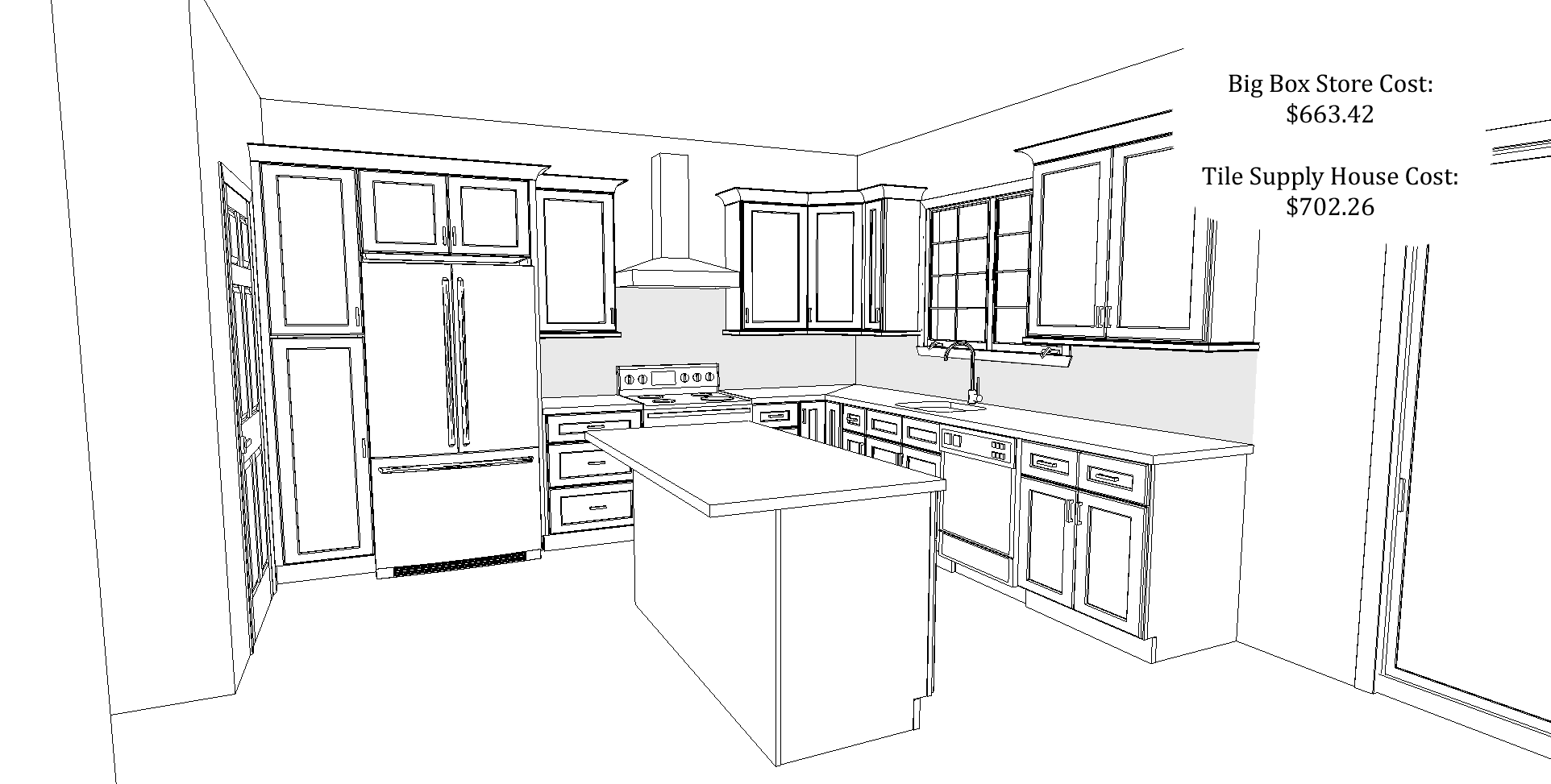
In the above mentioned scenario, we’ve got an L-shaped kitchen that has approximately 33 square feet for a full height backsplash and 5.7 square feet for a standard backsplash. If we look at the increased square footage of countertop, our costs are going to be lower at $310.85, but if we want to use a basic, white ceramic subway tile, our costs are going to increase, depending on where we purchase materials, anywhere from $663.42 – $702.26.

Where’d these number’s come from?
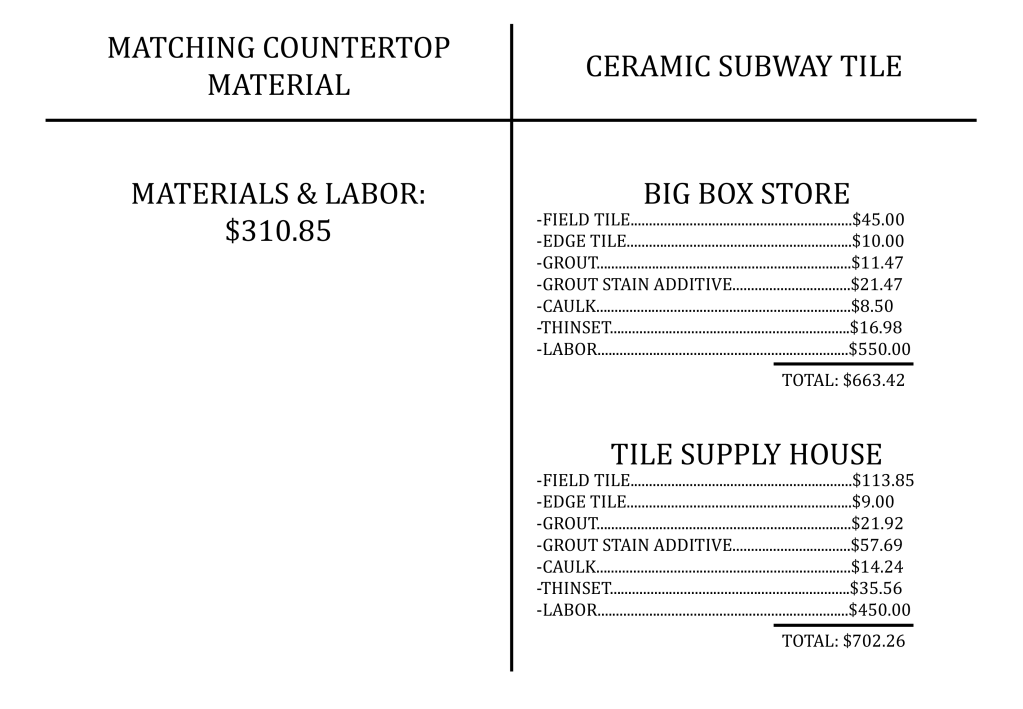
The Fine Print
Think carefully about the priorities in your project and what your goals are- for this builder, it’s my recommendation to do a matching countertop backsplash, but if this were your dream home, you should spend the extra to get what you want. There’s no clear cut answer and it’s going to vary from project to project. The point here is to simply think through your design choices and price out all your options.
 FI Kitchen Guy